

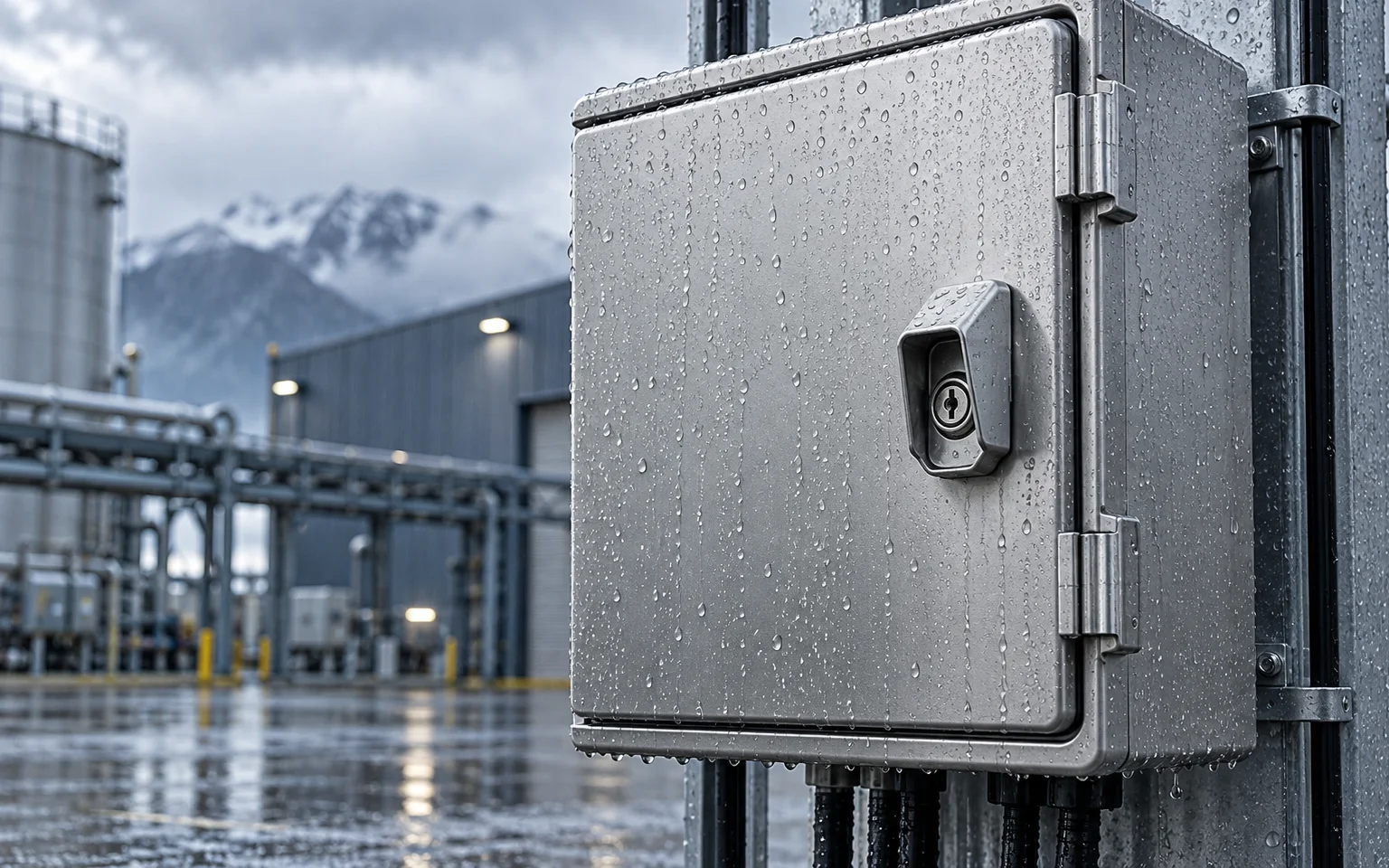
The IP designation frequently seen on electrical panels defines the protection the enclosure provides against external factors. Reading the IP code correctly prevents choosing a protection level that is too low or unnecessarily high for the project.
How is the IP code read?
The first digit after IP indicates protection against access to hazardous parts and the entry of solid foreign objects. The second digit shows the level of protection against the effects of water, such as dripping, spraying or pressurised water. As the digit increases, the test condition and the level of protection increase.
Is a higher IP always better?
Choosing the highest protection class alone is not the right approach. Very tight sealing can make it harder to manage the heat inside the panel and create a need for additional climate control. For this reason, the heat generated by the equipment must be taken into account as well as dust and water risk.
Protection is a complete system
Body structure, door gasket, lock mechanism, cable glands and holes made during installation together determine protection performance. An unsuitable cable entry or an uncontrolled on-site intervention can weaken the protection provided by the panel body.
When choosing a panel for indoor, open-air or heavily dusty production areas, having environmental conditions assessed by an expert team ensures a safe, balanced and economical solution.